
In Memoriam, Antony Price
17 December 2025
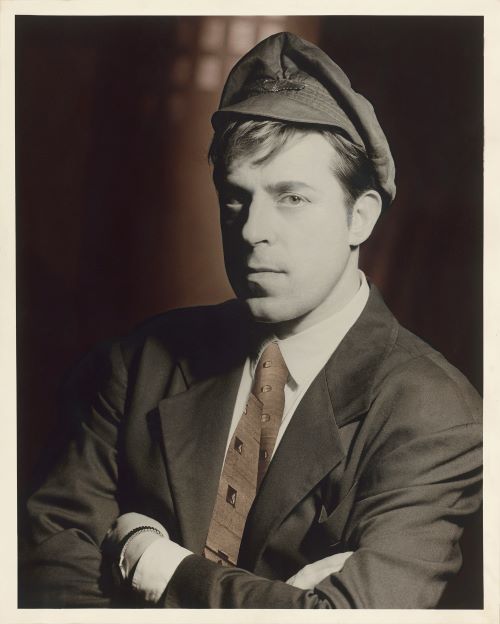
Photo by Indüstria (Brad Branson & Fritz Kok) 1988
Antony Price was one of the most significant and influential British fashion designers of the last century.
A legend in his own time, Price is famed for his ground-breaking relationship with musicians, including the Rolling Stones, David Bowie, Duran Duran, Grace Jones and Lou Reed, although primarily known for his formative contributions to the aesthetics of Bryan Ferry and Roxy Music. Price’s work with Roxy Music was the first time a fashion designer had collaborated with musicians to refine their visual iconography as a key part of their creative expression, and established a template still shaping both music and fashion industries today. Often called the ‘Rock Couturier’, Price’s work fused his wizard technical skills with an unparalleled flair for showmanship to create exceptional clothes that would help shape the course of fashion, and collaboration that would shift culture more widely.
Price’s designs in the 1970s – whose broad shoulders, sharp waists and glistening, luxurious fabrics invented a new breed of glamour – foreshadowed the styles of the 1980s. They proved an influence on talents as renowned as Vivienne Westwood and Thierry Mugler, while John Galliano and Alexander McQueen were each inspired by his clothes and lavish catwalk presentations that crossed boundaries between theatre and fashion. His custom-made clothes have been worn by figures as wildly varied as Paula Yates and Tilda Swinton, Daphne Guinness and Jerry Hall, Kylie Minogue and Her Majesty Queen Camilla. Latterly, through a 2025 collaboration with London label 16Arlington, his style and influence was brought to a new generation including Adwoa Aboah, Edie Campbell, Lila Moss and Lily Allen. Famously, the broadcaster Janet Street-Porter described his clothes as ‘result-wear’, referring to the inbuilt, ingrained sexuality inherent in Price’s reshaping of the human body.
Antony Price was known as ‘the frock surgeon’ for the sculptural quality of his clothes – exaggerating shoulders, hips and breasts, minimising waists, idealising the form and creating unreal silhouettes reminiscent of comic-book heroes and Hollywood idols, both of which were formative influences and constant references. A master pattern-cutter who devised all of his clothes himself, Price once described his work as “pure art, crafted around a 22-inch zip.”
Born in Keighley, Yorkshire in 1945, Antony Price studied at Bradford School of Art and then the Royal College of Art’s Fashion School, graduating in 1968. The same year, he began to work for the era-defining store Stirling Cooper, a cult retailer and counterpart to Quorum and Biba, and in 1969, a pair of his body-hugging trousers were worn by Mick Jagger for The Rolling Stones’ 1969 US tour, ‘Gimme Shelter’, the first time a musician wore his designs. Later, he would work under the labels Che Guevara and Plaza – the latter boutique immortalised in the 1979 Roxy Music song ‘Trash’, with its lyric “Go to Plaza, where’s the trade?”
Price’s relationship with Roxy Music dates back to their debut album in 1972 – Price styled its cover model Kari-Ann Muller, the first of what became known as “the Roxy Girls”, and also the members of the band in his own designs. Price has been credited as the chief ‘illusionist’ of what he dubbed ‘the Roxy Machine’ and subsequently contributed to all eight Roxy Music album covers – including such iconic images as Amanda Lear wrapped in ciré satin tethered to a panther, and Jerry Hall as a supernatural siren crawling over rocks in Wales. Indeed, Price became so associated with Roxy Music he was referred to as the band’s ’silent member’. He also styled the erotically-charged ‘His-n-Hers’ 1972 back cover artwork for Lou Reed’s ‘Transformer’, and has continued to create clothes for private life and performance for close friend and collaborator Bryan Ferry for over 50 years. Ferry has described Price as “A master craftsman” and “one of the most remarkably gifted people I have ever met.”
Antony Price established his eponymous label and staged his first fashion show in 1980: the opening looks were worn by supermodels Marie Helvin and Jerry Hall, whose dress for her wedding to Mick Jagger he also made. In total he staged six fashion shows between 1980 and 1990, including a legendary “Fashion Extravaganza” at the Camden Palace, staged in 1983 with all the pizzaz and drama of a rock concert, to rapturous critical and public acclaim. His shows featured supermodels including Naomi Campbell and Yasmin Le Bon. In the 1990s, he began to create made-to-measure clothes for a coterie of loyal clients – he famously dressed long-term fan Paula Yates in an eye-popping transparent lace dress for the 1994 Brit Awards ceremony. He was a regular collaborator with his close friend, the milliner Philip Treacy. Price would often create custom outfits to accompany Treacy’s aerodynamic hats.
In November 2025, after a 35-year absence, Antony Price returned to the catwalk for a triumphant salon show of demi-couture outfits created in collaboration with Marco Capaldo and 16Arlington. The 16 outfits were as singular and instantly-recognisable as the body of work that preceded them, a celebration of the body, of personality, and of the transformative power of glamour for all.
Price grew up on a working farm and throughout his life he maintained that deep connection to the natural world. He was a passionate gardener and admirer of all fowl, keeping an assortment of live birds – friends, stylists and clients visiting his home and workshop would encounter ornate chickens, golden pheasants and his beloved peacocks, which lived around him like household pets. Their rich plumage found direct reflection in the artful display and extravagance of Antony Price’s extraordinary and wonderful clothes.


